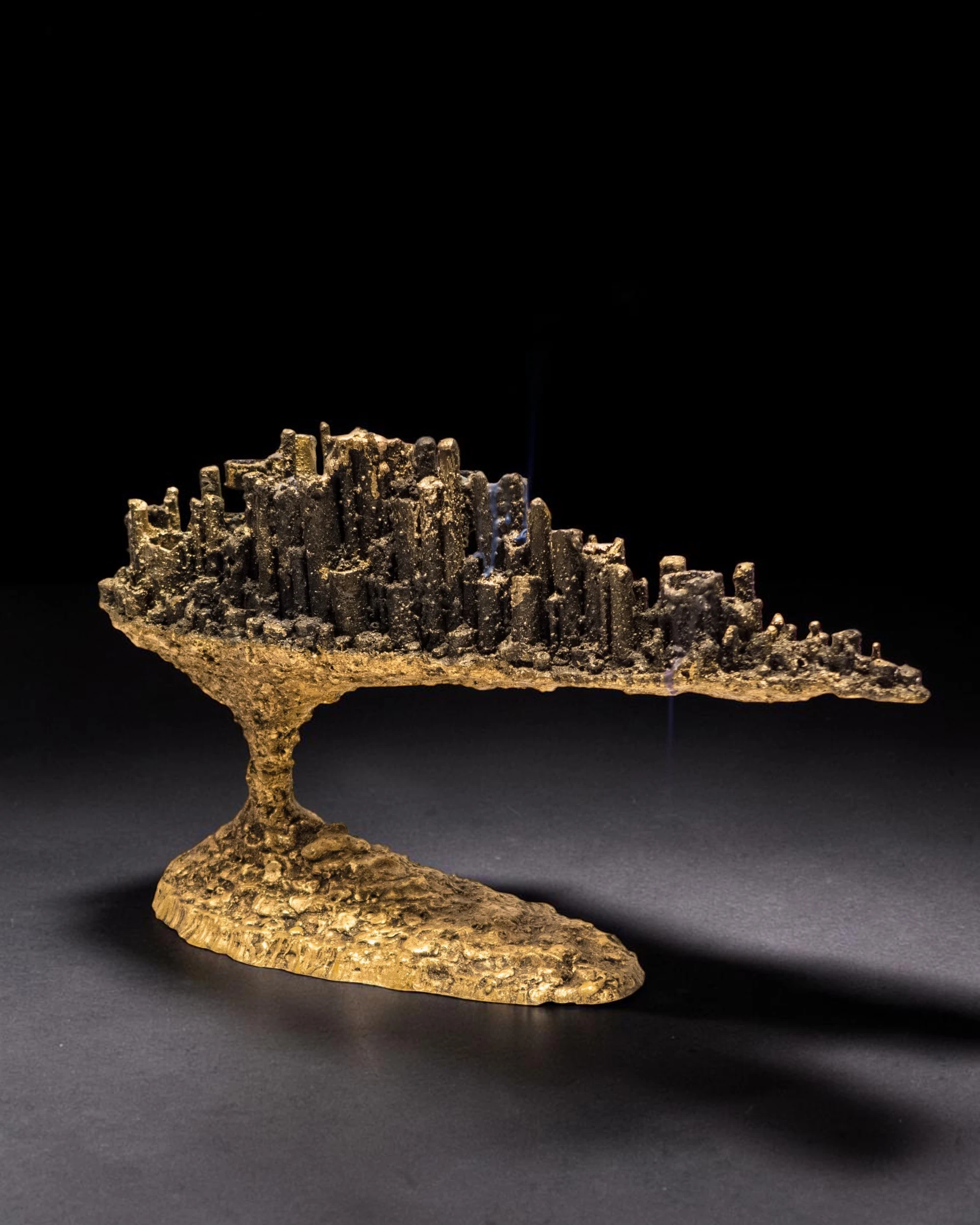
Bronze Sundial
English, circa 1720–1730
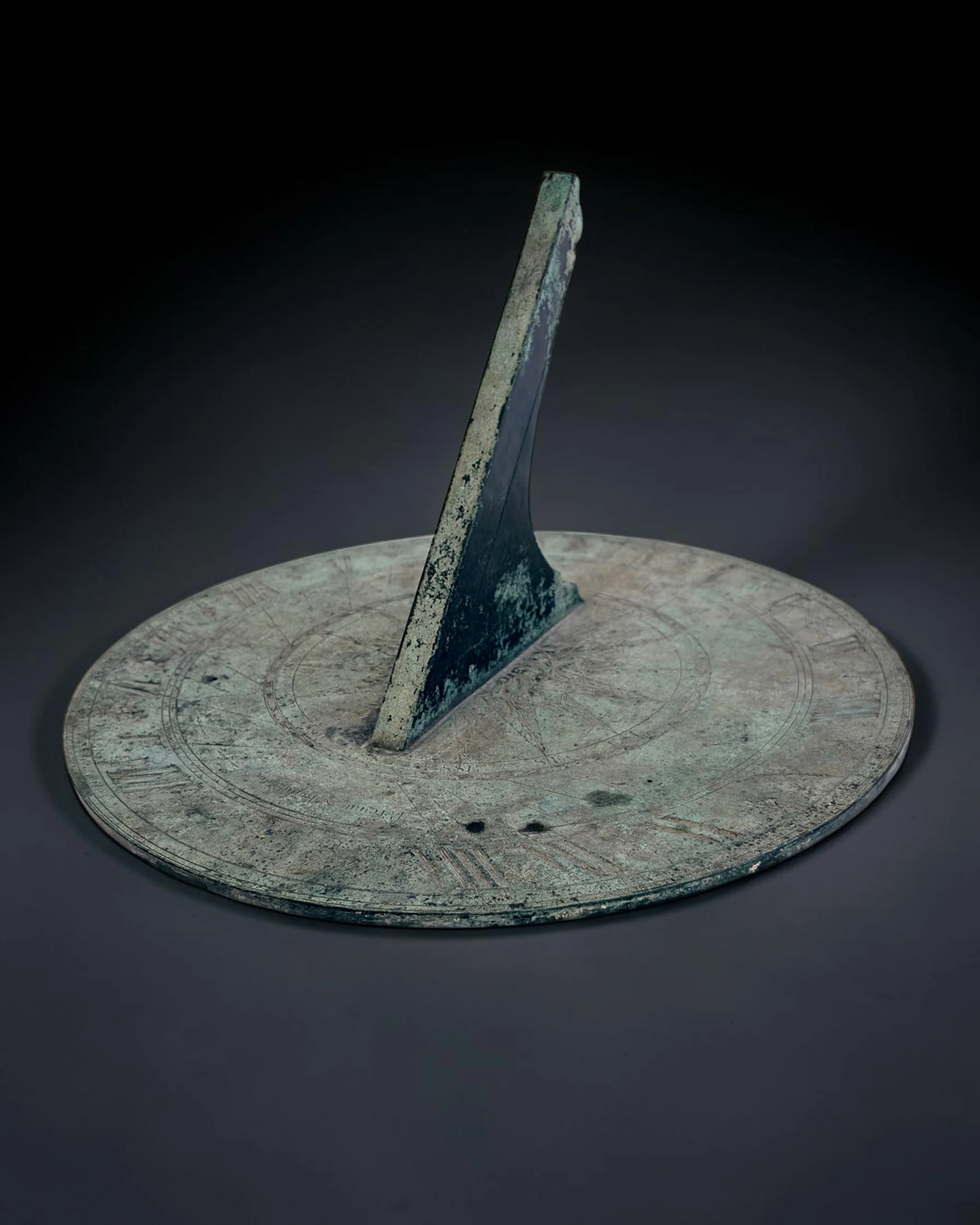
Beautifully patinated, retaining its original gnomon and finely engraved Roman numeral chapter ring.
The engraved dial features Roman numerals upon which the gnomon casts its shadow to indicate the time. Signed by John Coggs, its richly weathered surface has acquired an attractive patina consistent with centuries of exposure to the elements. Projecting fixing studs on the underside suggest that the sundial was originally mounted on a stone pedestal or other architectural support.
John Coggs (fl. 1690–1740) is recorded as working at the sign of the Globe and Sun, opposite St. Dunstan’s Church in Fleet Street, London, between 1718 and 1733. An established maker and retailer of mathematical and scientific instruments, Coggs supplied a variety of instruments, including universal equinoctial ring dials. In 1733, the business became Coggs & Wyeth, subsequently trading as Wright & Wyeth in 1740.
It’s later than you think.
REFERENCE
G. Clifton, Directory of British Scientific Instrument Makers 1550–1851, 2003.
E. G. R. Taylor, The Mathematical Practitioners of Hanoverian England 1714–1840, 1966, pp. 114, 172.
Thank you.
I will follow up with you shortly.