Important Pair of George III Giltwood Armchairs
English, Circa 1775
H 38 in W 30 in D 25 in Seat H 17 ½ in
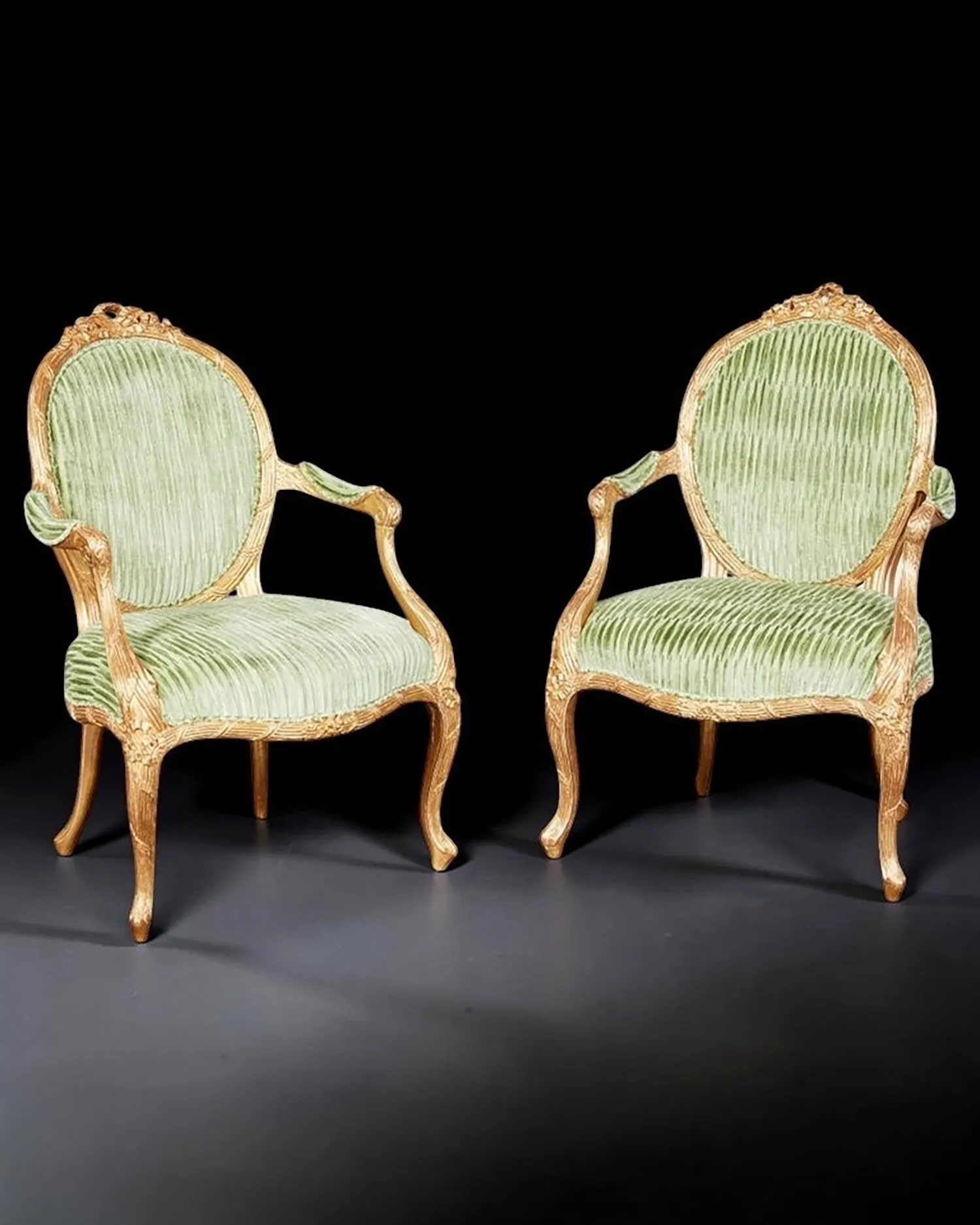
The oval backs surmounted by ribbon-carved crestings above ribbon-bound reeded frames, the open padded arms terminating in scrolling handholds with foliate-carved terminals above generously proportioned seats raised on cabriole legs. The carving throughout enriched with ribbon-bound reed ornament and retaining a refreshed gilded surface.
The design relates closely to the work of the celebrated English designer and cabinetmaker John Linnell, particularly in the use of ribbon-bound reed carving, oval backs, and sweeping arm supports. The motif appears in documented Linnell commissions and is closely associated with his late eighteenth-century seat furniture.
Chairs of related form were commissioned from Linnell, and several comparable drawings survive. Similar arm treatments appear on other known Linnell seat furniture, while the ribbon-bound reed motif recalls elements from the suite supplied for Osterley Park. Related examples were also produced for the Duke of Northumberland at Alnwick Castle. Comparable ornamental motifs and related chair designs appear in surviving John Linnell drawings preserved in the Victoria and Albert Museum, including designs associated with Harewood House and Alnwick Castle.¹
Now upholstered in Suzanne Tucker Home “Irene” cut velvet.
LITERATURE
¹ Helena Hayward and Pat Kirkham, William and John Linnell: Eighteenth Century London Furniture Makers, 1980, p. 29, fig. 50; p. 33, figs. 59–60
Victoria and Albert Museum, London, accession nos. E.59-1929, E.68-1929, E.85-1929, and E.93-1929.
Thank you.
Your enquiry has been received. Patrick Bavasi will follow up with you directly.