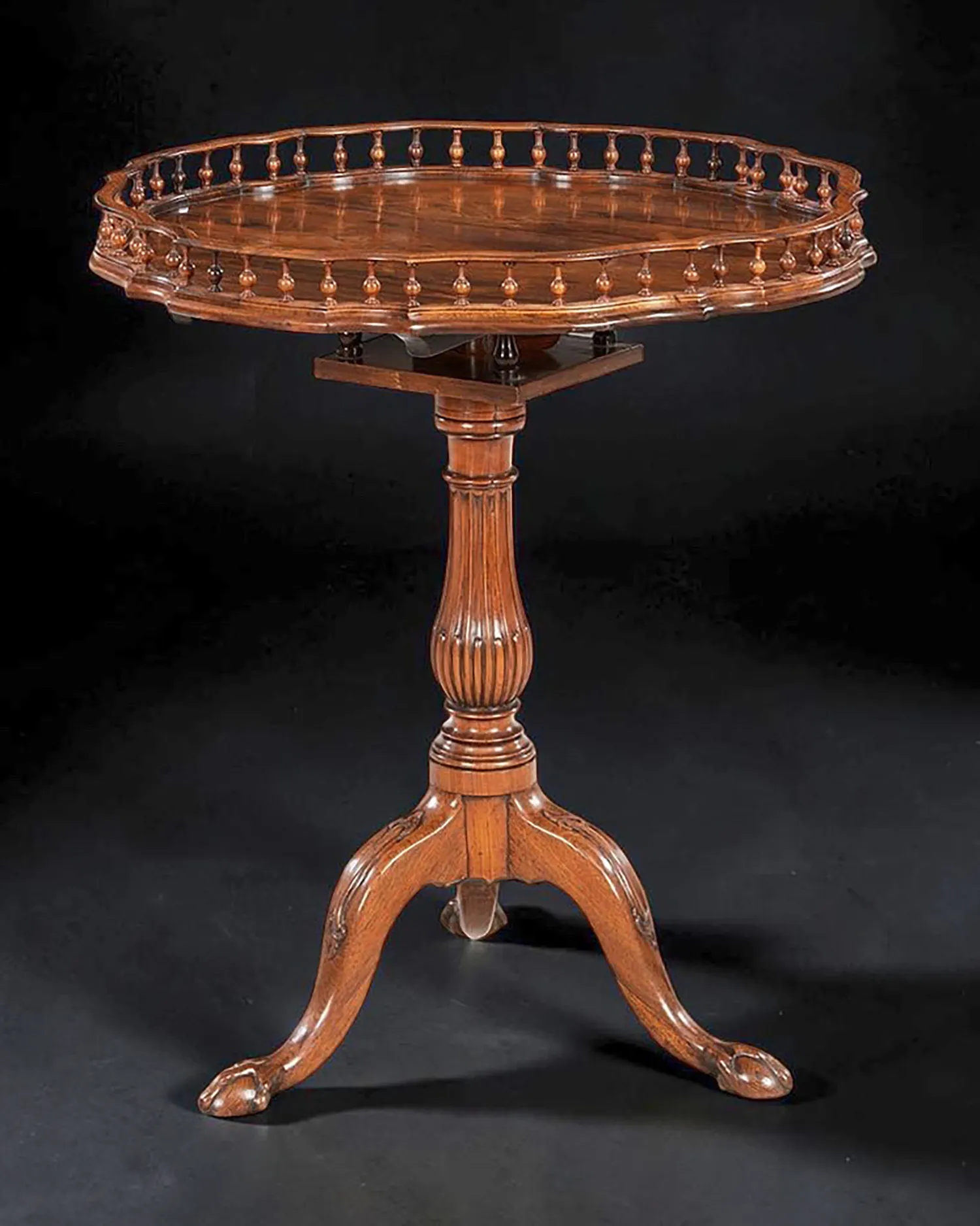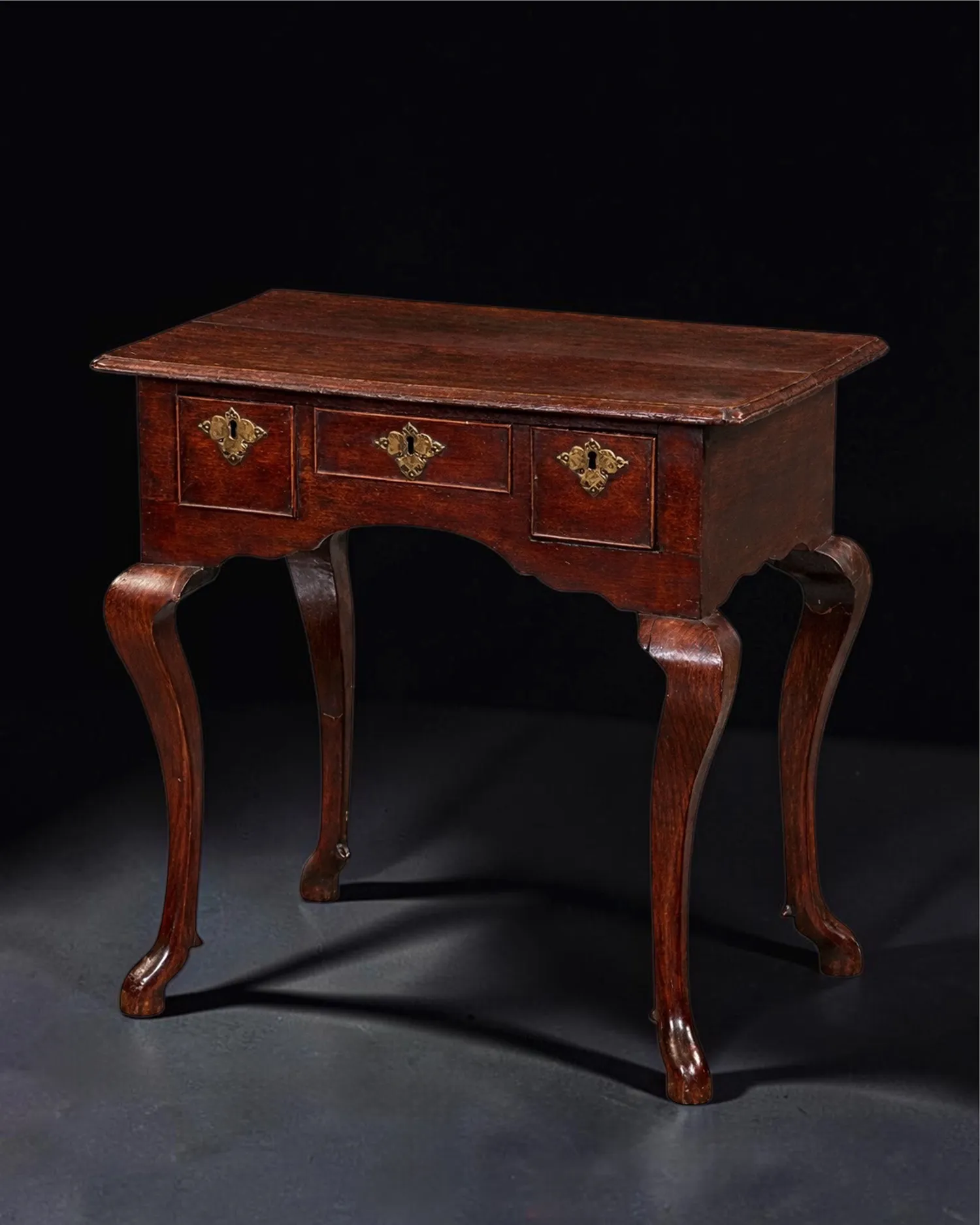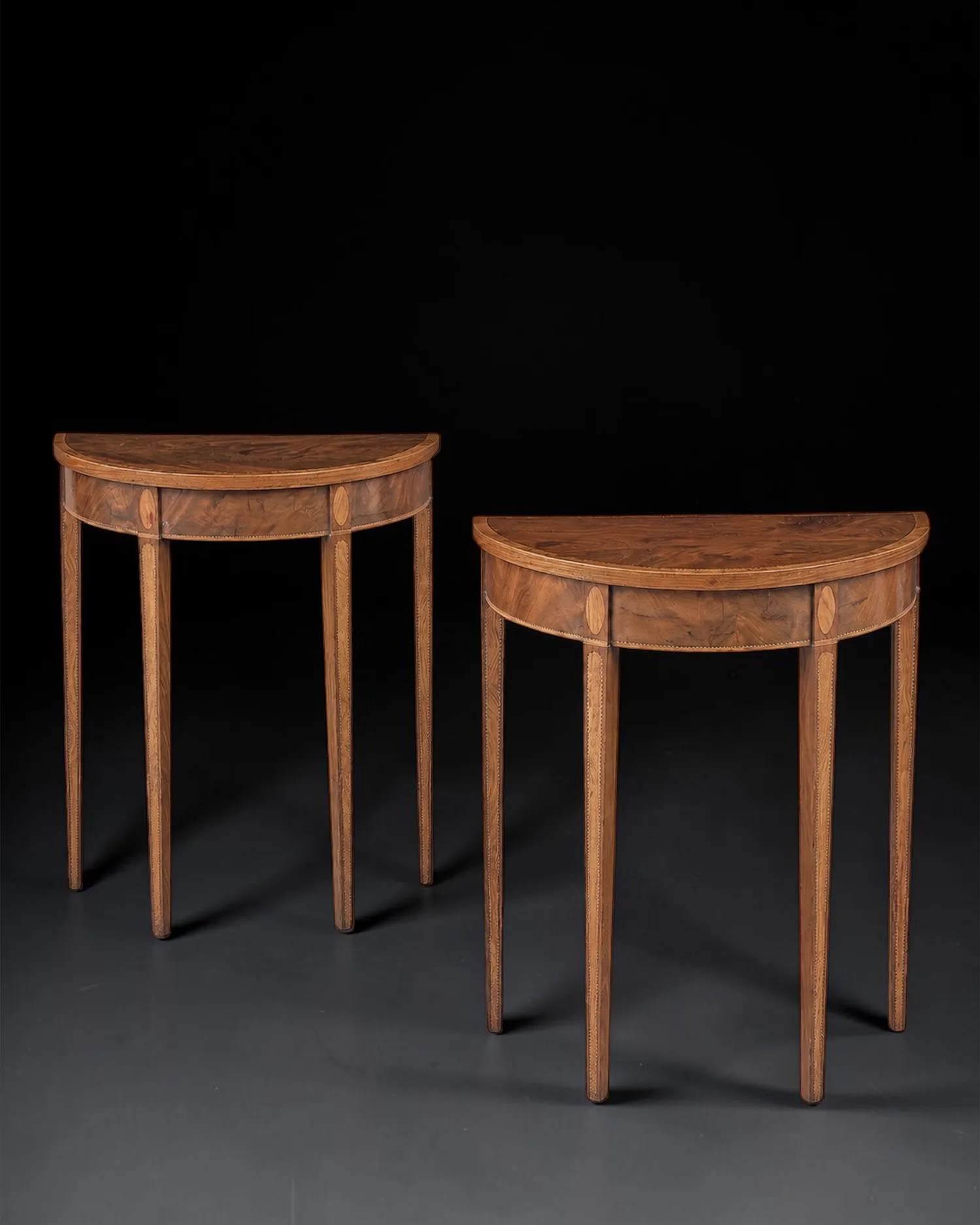
Fine Regency Occasional Table
english, circa 1820
H 28 ½ in W 24 in D 15 in
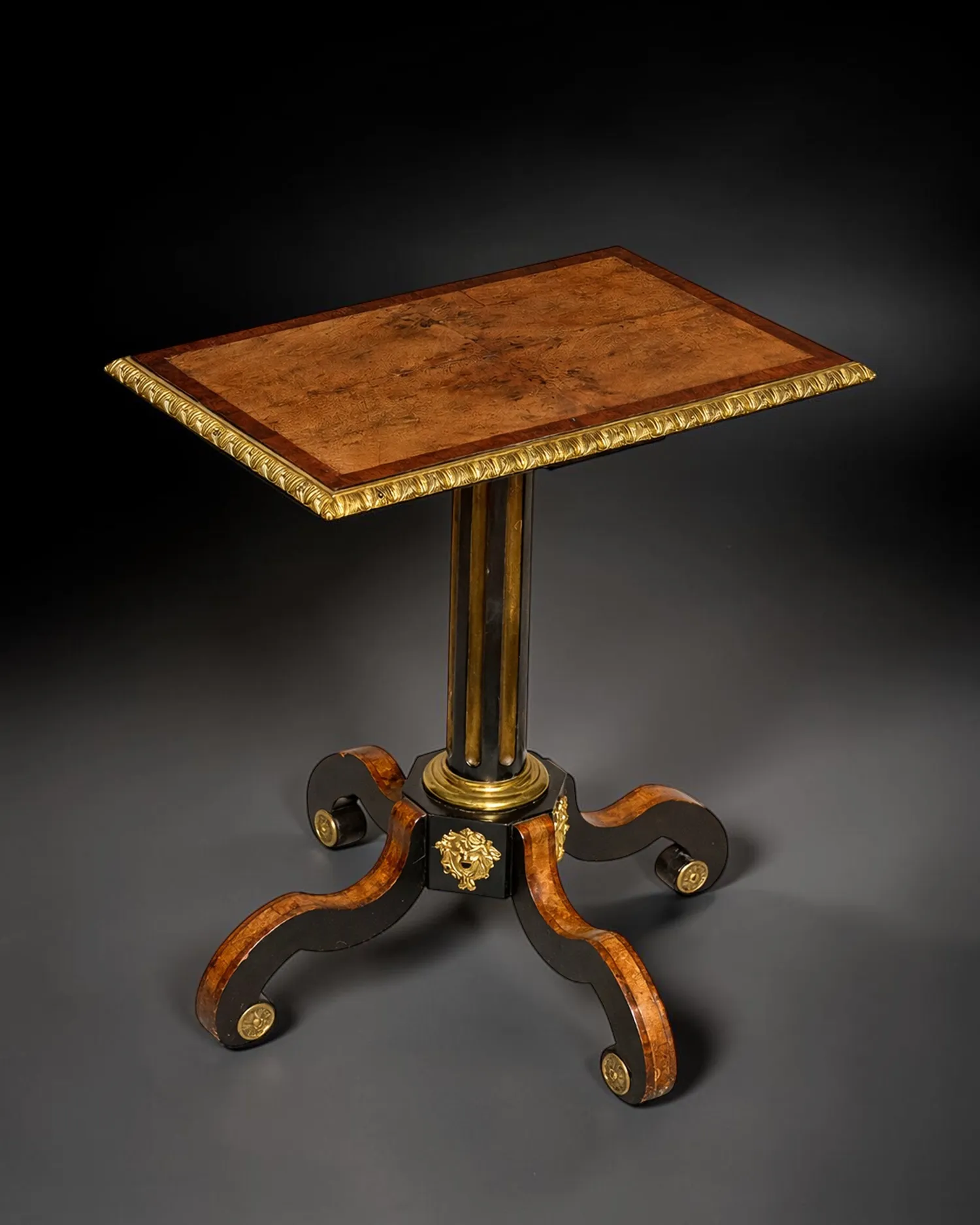
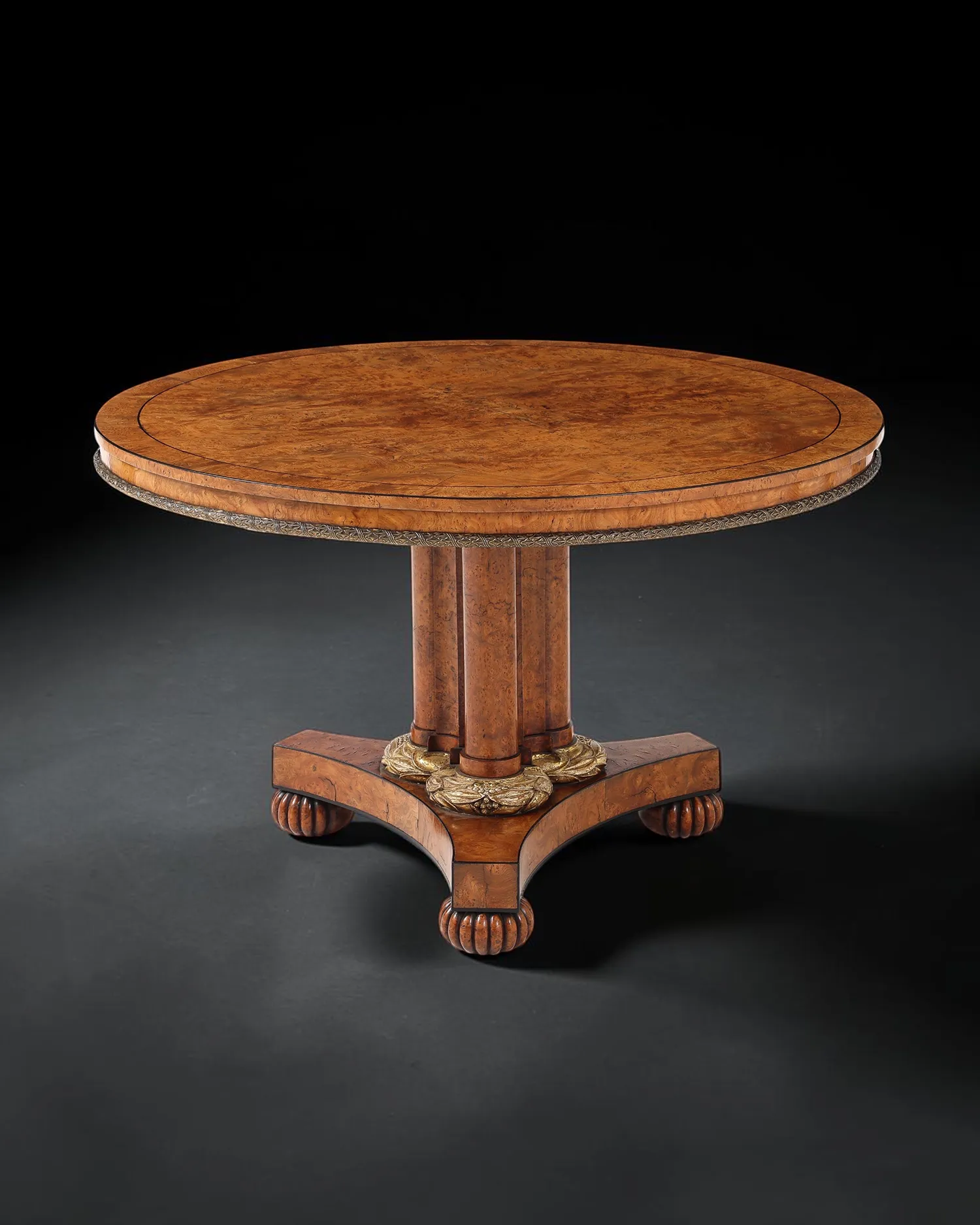
Richly figured walnut and rosewood veneers are combined with ebony veneering and finely cast ormolu mounts throughout. The rectangular top is framed by an acanthus-cast ormolu edge above a slender columnar support with gilt-mounted fluting, raised on a quadripartite base with scrolling legs in the Louis XIV manner. The contrast between the warm veneers, dark ebony ground, and gilt metalwork is especially effective.
The table reflects the strong French influence present in the finest English Regency furniture and relates closely to the work of the London cabinetmaker Thomas Parker. Best known for his revival of Boulle work during the Regency period, Parker frequently adapted Régence and Louis XIV forms to English tastes, combining French ornament with the cleaner proportions favored during the reign of George IV.
Several documented tables attributed to Parker employ closely related bases, including examples with scrolling quadripartite supports, lion-mask mounts, and clustered column shafts. A closely related tripod table attributed to Parker and supplied to George IV was illustrated by H. Blairman & Sons in 2007.¹
Thomas Parker operated from 19 Air Street, Piccadilly between 1808 and 1817, later relocating to Warwick Street, Golden Square, where he remained active into the late 1820s. The Prince Regent, later George IV, patronized the firm and commissioned notable furniture for Carlton House, including a pair of caskets-on-stands.²
LITERATURE
¹ H. Blairman & Sons Ltd., The Manufacture Attributed to Thomas Parker, 2007, p. 4, no. 4. See catalogue: Click PDF
² Geoffrey Beard and Christopher Gilbert, The Dictionary of English Furniture Makers 1660–1840, 1986, p. 675.
Thank you.
Your enquiry has been received. Patrick Bavasi will follow up with you directly.